
We Called It Discrimination. They Called It Fascism.
Salaria Kea working as a nurse in Spain, undated. [Abraham Lincoln Brigade Archives]
A line of picketers carrying tiny caskets assembled in front of Manhattan’s Harlem Hospital one autumn day in 1936. They marched around the five-story red-brick building that the largely Black neighborhood had taken to calling a “death house,” bearing placards that read, “End the Needless Deaths of Harlem Babies.” They wanted an explanation for a diarrhea epidemic that had swept through the hospital that summer, killing dozens of newborns.
Watching the mourners with concern was a twenty-four-year-old Black nurse, Sarah Kee. She knew what had caused the infants’ deaths: understaffing. Kee had realized the danger months earlier when she was scrambling to keep an eye on a crowded ward and found a mother obliviously feeding a baby contaminated milk. Kee and other nurses often had to tend forty-five babies at once, they wrote in a letter to New York City Mayor Fiorello LaGuardia that October, making it impossible to care for them properly or self-sanitize after handling sick ones.
Their letter was not LaGuardia’s first warning about the hospital. The previous year, he had appointed a commission to examine it as part of an effort to uncover the “social and economic conditions” that had sparked violent riots in Harlem. Investigators found rotten meat in refrigerators and roaches and rubbish scattered across the kitchens. “Bloody operations” on adults occasionally had to be done in the children’s ward due to space constraints. The 325-bed facility sometimes hosted up to 450 patients, forcing some to sleep on chairs. Those who couldn’t climb stairs traveled between floors in a garbage elevator, because the regular one was broken.
Racist policies exacerbated the health risks for Black medical staff. The citywide practice of assigning Black student nurses to lengthy stints in tuberculosis wards, for example, led one in seven to catch the illness. “Discrimination against the Negro Nurse has gone so far,” wrote LaGuardia’s commissioners, “that they are forced to work under conditions which constantly endanger their health, even their lives.” The commission was not reassured when the man responsible for overseeing the city’s hospitals, Sigismund Goldwater, responded that every minority group was subjected to racial prejudice, “and has been for all time.”
His attitude infuriated Kee, who was then working in a “no-return unit” of terminally ill tuberculosis patients: a treacherous job for a slight woman of ninety-six pounds, given the disease’s greater lethality among underweight individuals. When she heard Goldwater imply in a public meeting that Black staff were destined to contract tuberculosis more than their white counterparts, Kee remembered in an interview decades later, she stood up and declared that she now understood why she had been placed in the unit: “‘You wanted to be sure that’s what I was going to die of—isn’t it so!’” Her words garnered applause, and results. Days after her stand, she was transferred to a different ward.
LaGuardia never published his own commission’s findings. Goldwater stayed in power. So did a Harlem Hospital board member whose “racial attitude,” the commissioners wrote, “like that of Hitler towards the Jews, causes him to ignore and belittle the scientific ability of medical men who are black.”
The hospital’s Jewish and Black staff had also noticed parallels in the prejudiced treatment they received. As she learned about Hitler’s anti-Semitic policies from European colleagues, Kee began to realize how U.S. state-sponsored racism similarly enabled violence. “We only knew the Ku Klux Klan was killing people like us, and we had never put them together with the government” and the anti-Black discrimination it enforced, she recalled in the interview decades later. “So now we’re matching what’s happening in Germany to the Jews ... to what’s happening to us here in the United States.”
When the 1936 diarrhea outbreak struck, Kee saw the hospital’s racist machinery in motion again. In “cause of death” reports sent to the city each month, she discovered, many of the infant fatalities were being attributed to syphilis and gonorrhea: a lie that obscured the understaffing problem and fed stereotypes about Black people being prone to venereal disease. Nor had conditions improved for most of the staff. A few months after the babies’ deaths, prominent Harlem dentist Arnold Donawa accused Goldwater of “criminal negligence amounting to murder” when thirty-four Black nurses with influenza were denied treatment at their own workplace.
Kee and Donawa were allies not only in the fight to improve Harlem Hospital but also in efforts to alleviate suffering abroad. A cerebral, bespectacled oral surgeon from Trinidad, Donawa had been the first Black dean of Howard University’s dental school before opening a private practice in New York. He and Kee got acquainted through United Aid for Ethiopia, a coalition that formed in the lead-up to Italian dictator Benito Mussolini’s October 1935 invasion of the East African nation. In January 1936, weeks after LaGuardia’s commission finished its report on the abysmal conditions at Harlem Hospital, the group fundraised and shipped an entire field hospital to Ethiopia: a tent as long as a basketball court; fifty cots and mattresses; and assorted linens, blankets, and bandages.
LaGuardia, meanwhile, attended a pro-Mussolini Madison Square Garden rally to raise funds for Italy. When the crowd clamored for a speech, he declared their cause “quite just,” praised the “loyalty” of Italian Americans, and lauded “the tradition of our country to send help wherever help is needed.” The mayor also promised not to let the city become a “battleground of racial antagonisms”—an apparent reference to the groundswell of Black support for Ethiopia. Donawa fired back in an open letter, telling LaGuardia his attendance had earned the “justified indignation of the Negro masses of Harlem and other sections of New York City.”
Kee started to see more clearly how Mussolini’s invasion of Ethiopia, Hitler’s persecution of European Jews, and anti-Black racism in the United States were entwined. A new international consciousness of oppression unfolded in her mind, she explained in the interview decades later:
We called what was happening to us discrimination, because we were colored, and we thought that was the only thing that’d happened in the world … But they called it fascism. So then we said “fascism,” and included everybody in the world, not just the Black people.
The ramifications of this emerging intersectionality were also expansive. In Alabama, five Black Americans were arrested for boycotting Italian American-owned stores. Two months later, a historian visiting the state on behalf of a relief group told churchgoers that Black Americans “may be forced to use Ethiopia and her emergency as a means toward their own salvation.”
Thousands volunteered to fight for Ethiopia, and Emperor Haile Selassie said he “welcomed” American recruits, prompting the US Justice Department to issue a reminder that the Neutrality Act of 1794 still banned American citizens from enlisting with foreign powers to fight nations with whom the United States was at peace. President Franklin D. Roosevelt signed a second Neutrality Act into law a few weeks after an Ethiopia solidarity rally drew 25,000 onto the streets in Harlem, empowering himself to ban Americans from exporting “implements of war” to warring countries or traveling on “vessels of belligerent nations.” In his August 1936 “Good Neighbor” speech, Roosevelt vowed the United States would “shun political commitments which might entangle us in foreign wars.”
Kee, however, wanted to volunteer as a field nurse for a cause within the United States. In January 1937, rain pounded her home state of Ohio for twelve days, generating historic floods that killed 350 and left an estimated 1 million Americans homeless. A Red Cross flyer appeared on the Harlem Hospital bulletin board one morning, summoning healthcare workers to the destruction zone. Kee and some of her colleagues went to sign up, but the relief group accepted only the white volunteers, telling Kee they had no place for her. When she returned to the hospital, deflated, a doctor drew her attention to another opportunity posted on the same board: a call for medical volunteers to go to Spain.
At United Aid for Ethiopia, Donawa had already told Kee about General Francisco Franco’s July coup attempt against the democratically elected government of Spain. She had started paying closer attention in September, when Mussolini sent Italian troops to support the ongoing insurgency. The conflict now came into focus for Kee as the most accessible bulwark against the tide of oppression she saw surging across the world. “I knew what had happened in Germany, and I could see this coming all the way to America,” Kee recalled in the interview decades later. “‘It’s going to be fascism if you don’t get out there and fight.’”
By mid-March, the Medical Bureau of the American Friends of Spanish Democracy had approved Kee as a qualified volunteer. She was booked for passage on a ship along with twelve other recruits and $10,000 in medical supplies that an American doctor already stationed in Spain had requested. The Bureau’s press release about Kee’s unit — the third group it had dispatched so far — referred to her as the “first Negro nurse to be sent to Spain.”
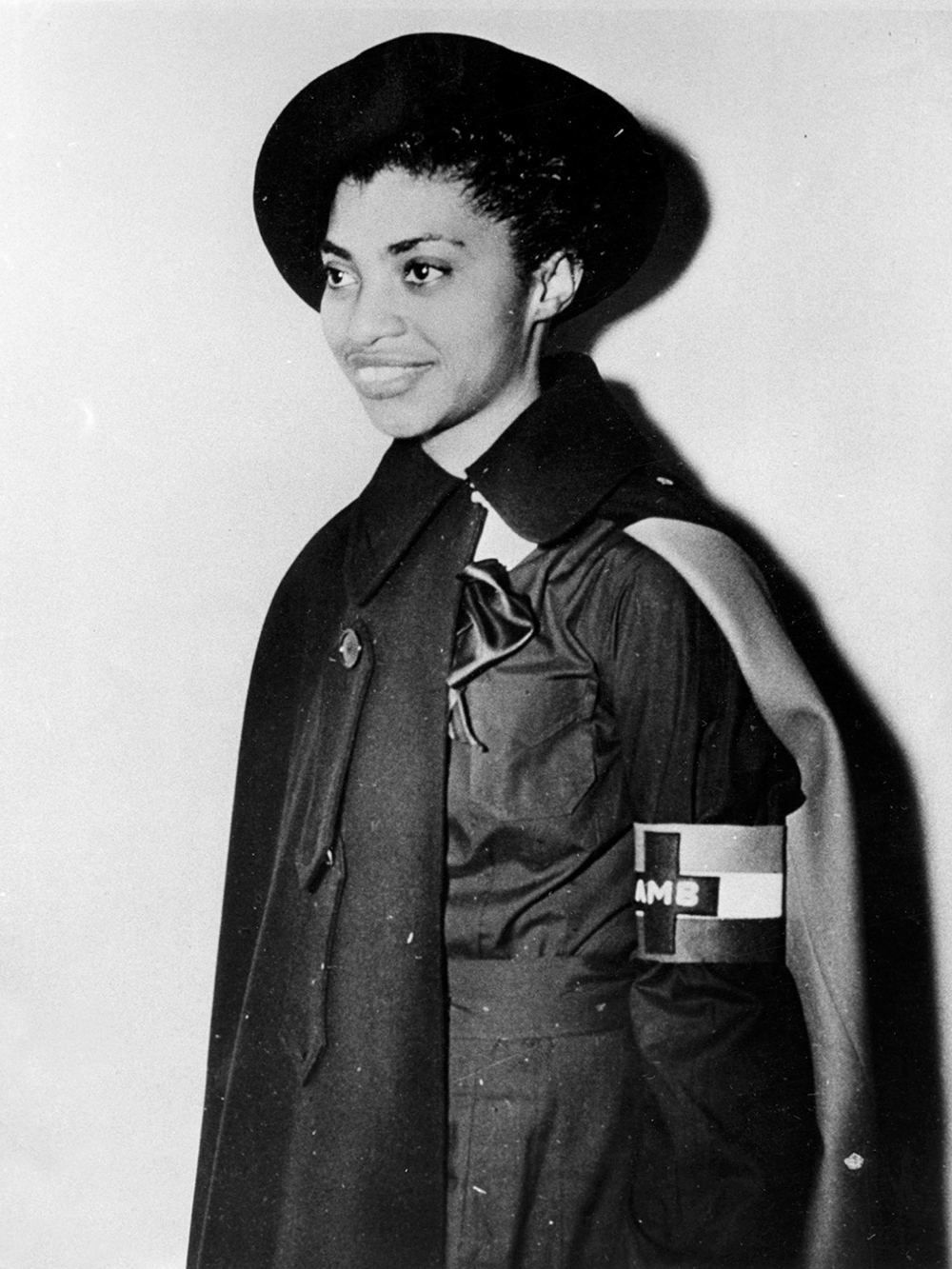
On March 27, 1937, Kee stepped onto the SS Paris and set sail from Manhattan’s West 48th Street pier. An article about her journey appeared that day in the New York Amsterdam News, the city’s oldest Black newspaper, describing her as a “slim, brownskin miss, with soft eyes and an appealingly demure expression,” unruffled by the danger awaiting her. Kee told the reporter she hoped to “encourage Negroes to do more for the sake of democracy, to show my own people that there is something more we can do and to prove that we have a place in the world.” But, she said, her primary aim was to “help the injured people.”
From the start, Kee’s sincerity would be challenged. A few weeks after her arrival, the US consul general in Barcelona warned the secretary of state that the medical units had gone to Spain “not from purely humanitarian motives, but with the primary purpose of assisting one of the opposing parties to win the war.” Their presence, the diplomat complained, had fostered “the belief that there is a bit of a sham about the ‘complete neutrality of America.’” A State Department lawyer forwarded the information to the U.S. attorney general several weeks later, for “such inquiry as you may deem it advisable to make.”
Kee was attacked by some allies of her cause. The first person to denounce her after she joined the brigade was a fellow medical volunteer in her unit. When she entered the ship’s dining room the first night, Dr. Donald Pitts, a surgeon from Oklahoma, refused to sit at the same table with her. In two separate interviews decades later — by which time Kee had changed her name to Salaria Kea — she recounted his exact words: “‘I have never sat at the table with a [N-word] wench, and I’m not going to start now.’”
One interviewer asked Kea what it made her think when, en route to fight fascism, she encountered such rank bigotry among her own comrades. “Nothing,” Kea replied. “I could see that’s the world. See, I knew America. I knew he was a Southerner.”
“Didn’t it make you worry that the people who were going to fight fascism were racist?” the interviewer asked.
No, Kea said, that was “just the way it was.”
“Were you disgusted?” the interviewer pressed.
“Look, doll, if I turned around and hated everybody that did anything to me, I wouldn’t be here,” Kea explained patiently. “I’d be dead. Or in a mental institution.”
Excerpted from Americans Without Borders: The Radical Activists Who Fought for US Ideals Abroad While Facing Political Persecution at Home by Julia Harte, published by Redwood Press, an imprint of Stanford University Press, © 2026 by Julia Katherine Harte. All Rights Reserved.
