The Art of Writing History
Hardly anyone uses the term genius to describe a historian. The traditional attributes of genius — usually considered to be some combination of raw talent, vast intelligence, or an innate gift — do not fit well with the vocation and career trajectories of most historians. Unlike in mathematics or music, there is no such thing as a historian “teenage prodigy,” and few — if any — historians sign huge book or record deals when they are very young. If anything, the historical profession leans in the other direction: great value is placed on age, experience, and amassing large amounts of knowledge. Excessive youthful hubris is generally suppressed with claims that truly great historical work can only be done after a long period of apprenticeship and many years spent in the archives. It is telling that even an acclaimed historian like Eric Hobsbawm — whose talent, intelligence, and gifts were already recognized as a teenager — was hardly ever described as a genius during his lifetime. This epithet simply did not make sense.
And yet there is one aspect of the historian’s craft that overlaps with the realm of genius: the art of writing. Given the centrality of writing to the way historians think and share their knowledge, it is surprising how little training they get: most historians do not get lessons in how to write, except perhaps in their earliest student years. The focus is more often on the quality of research or the depth of knowledge. In some countries, this means that historical writing has a reputation for being tedious, descriptive, and excessively wordy. Britain is a partial exception to this rule. An obsession with strict word counts and a culture of accessible writing means that many British historians are encouraged to write in a way that might appeal to a wider audience.
Even so, the stylistic underpinnings of history writing are rarely treated in detail; at best, it is left to reviewers to comment on whether a particular book or essay “reads” well. While this might be justified for those who have little interest in perfecting their writing, there are many cases where it matters in a very profound way. One such case is clearly Hobsbawm, whose genius, insofar as it existed, was closely tied to his ability to write in a way that simplified highly complex processes without making any concessions to superficiality. He was not a narrative historian. He did not tell scintillating, swashbuckling stories of historical figures, nor did he paint dramatic pictures of people, places, or landscapes. His talent lay in dissecting contexts and ordering material. He had, as fellow historian Asa Briggs put it in 1964, an incessant “desire to ‘place’ and order every historical phenomenon” combined with a “crisp and economical style, with a suggestion of immense reserve power behind the most elegant phraseology.”
We can learn a lot about Hobsbawm’s approach to writing by looking closely at his Ages series of historical textbooks. In 2002, the well-known British Left intellectual, Perry Anderson, attempted a panoramic assessment of the Ages series, and he remarked on how few people had taken on this task: “If the three Ages enjoy a well-nigh universal admiration, they have attracted less critical discussion than they deserve, as often happens in such cases. This is partly a matter of the scale of their performance, which virtually defies any all-round view of them. Lacking that, particular points of dissent or reflection are bound to remain somewhat arbitrary or marginal.” Anderson was right. While there was a plethora of reviews of each Ages book at the time of its publication, there were — and are — hardly any critical essays that deal with the entire series. Successive generations of reviewers have attempted to pierce the veneer of Hobsbawm’s analysis, but they have generally been reduced to airing minor historiographical disagreements or indulging in political polemic, neither of which seem adequate responses to one of the most formidable attempts to write the history of the modern world in the English language.
Nor have Hobsbawm’s critics succeeded in blunting the impact of his books. The Ages series was far and away his biggest-selling publishing venture, with paperback copies gracing the shelves of hundreds of thousands of homes all over the world. It was not without reason that a journalist for The Observer wryly remarked in September 1985 that The Age of Revolution and The Age of Capital had become “part of the mental furniture of educated Englishmen” — and this was before the publication of the two final volumes, which were even more successful. The Ages series have cast their own shadow: so many of us have read them that it is difficult to see them as anything other than a completed edifice that has always existed.
Take The Age of Revolution, for instance, which was published in 1962. This would eventually become the first volume of the Ages series, but, at the time of publication, it seemed to come out of nowhere, a Marxist bolt from the blue, written by a rising star of the Left. Yet the ideas that underpinned it did not fall out of the sky. They were built on Hobsbawm’s reading and teaching since the mid-1940s. This was the mental world from which The Age of Revolution was born.
Let us begin with pedagogy. Hobsbawm believed passionately that his vocation was to communicate and educate through the written word. From his earliest teenage writings, everything was mediated through text. He wrote quickly, fluently, and often in one take. Regardless of the subject matter, the words poured onto the page. At no point in his career does he seem to have suffered from serious writer’s block. He continued to write even through some of his most difficult personal circumstances. Writing was more than a by-product of an intellectual life; it was the primary means of sharing ideas and insights with the world beyond academia. This was crucial because, like many other postwar British left-wing intellectuals, Hobsbawm wanted to communicate with a wider audience. He put this clearly in a long interview in 1978:
It is very important to write history for people other than pure academics … Particularly in the social sciences which are to be of some political and public use, it is essential to at least try to communicate with ordinary citizens. There is a considerable historical precedent for this. After all, even in economics, people like Adam Smith, Karl Marx and Keynes were not trying to write exclusively for professors, and in history the same is true. There are some very good historians who expect to be read by the broad public. To some extent this is a bit of an illusion, because one isn’t really writing for the average reader of the daily paper or the average television viewer. One does write for people who have a certain basic education.
This model of the knowledgeable layperson appeared on the first page of the preface of The Age of Revolution, whose “ideal reader” was supposed to be “the intelligent and educated citizen, who is not merely curious about the past, but wishes to understand how and why the world has come to be what it is today and whither it is going.”
In a narrow sense, this corresponded to the kind of adult students Hobsbawm taught at Birkbeck College, many of whom were returning to university education after long periods of employment and had gained considerable life experience. In a broader sense, this characterization of the ideal reading public was in line with the sorts of readers who were consumers and targets of the nonfiction paperback revolution. Hobsbawm’s writing was designed not simply to appeal to this public but also to partake in the act of creating it. This had a political dimension: his writing was a form of left-wing pedagogy — or, to put it differently, a form of consciousness-raising mediated through the written word. In this way, writing for the “intelligent and educated citizen” could be framed as a political act.
Pedagogy thus lay at the heart of The Age of Revolution. The book was designed to be a didactic exercise in “haute vulgarisation,” a term Hobsbawm had used as early as the mid-1950s. The contents of the book were organized in such a way as to educate readers about the period in question and to provide analytical structures that could be used to understand it. This set clear parameters for the style and approach. First, it required the elimination of any jargon, Marxist or otherwise. This was straightforward for Hobsbawm, who was not given to jargon, even in his most Marxist writings. He was on record to say that it was “essential” for academics to write in “normal language.” Second, it demanded absolute clarity of prose. Again, this did not take much effort. Hobsbawm’s prose was dominated by short sentences and a staccato rhythm, which were attributes he refined further in The Age of Revolution. Third, it necessitated the frequent use of lists. These appeared throughout the book. In most cases, they were used to summarize the reasons for a given event or process. The technique of breaking down explanations into a list of factors was a staple of the undergraduate student lecture in history, where the schematic presentation of causes and consequences was a vital pedagogical tool. Finally, and most importantly, Hobsbawm’s pedagogical approach depended on pithy descriptions of highly complex theories. Take, for example, the remarkable passage in which Hobsbawm described the structure of “bourgeois” revolutions:
In brief, the main shape of French and all subsequent bourgeois-revolutionary politics were by now clearly visible. This dramatic dialectical dance was to dominate future generations. Time and again we shall see moderate middle-class reformers mobilizing the masses against die-hard resistance or counter-revolution. We shall see the masses pushing beyond the moderates’ aims to their own social revolutions, and the moderates in turn splitting into a conservative group henceforth making common cause with the reactionaries, and a left-wing group determined to pursue the rest of the as yet unachieved moderate aims with the help of the masses, even at the risk of losing control over them.
Even to Marxist historians of the French Revolution in the 1960s, this would have seemed a highly simplified version of what took place in France after 1789. But the explanatory power of this passage lay in the clarity with which Hobsbawm captured the dramatic push and pull of the revolutionary moment and the ease with which he then extrapolated from one revolution to all revolutions. His uncharacteristic use of the overtly Marxist word “dialectical,” which might otherwise sound jarring, was softened by the plethora of other terms that surrounded it: “reactionary,” “conservative,” “masses,” “counter-revolution.” The result was a razor-sharp dissection of the dynamics of modern revolutionary processes that still remained faithful to the terminology of the time. Where many con temporary social theorists would have taken hundreds of pages to outline their theory of revolution, this same task was dispatched here, without warning, in four sentences.
If Hobsbawm’s commitment to pedagogy depended on concision and clarity, it also required him to maintain the interest of his readers. This sometimes took the form of arresting metaphors and associations: in his review essay, Anderson noted how frequently Hobsbawm drew on the natural world for his descriptions. At other times, it took the form of pointed adjectives to describe historical personalities: the “prim” Robespierre, the “huge and whoring” Danton, the “disagreeable, neurotic” Jean-Jacques Rousseau, or the “wooly-minded” Mazzini.
These descriptions were designed to restore texture to historical events by allowing readers to grasp the emotions that swirled around processes or people. The same was true of the way Hobsbawm played with different scales: he wrote from a “bird’s eye view,” but he reveled in intricate details. In his discussion of the arts, for instance, he offered up another remarkably concise summary of his basic analytical framework: “If a single misleading sentence is to sum up the relations of artist and society in [the period 1789–1848], we might say that the French Revolution inspired him by its example, the Industrial Revolution by its horror, and the bourgeois society, which emerged from both, transformed his very existence and modes of creation.”
Yet, rather than follow this up with additional theoretical gloss, Hobsbawm immediately moved on to discuss Mozart’s The Magic Flute, Beethoven’s Eroica symphony, and the novels of Goethe, Dickens, Pushkin, and Balzac. The juxtaposition of very specific examples with a very high degree of conceptual abstraction —in this case, what essentially amounted to a theory of the arts in bourgeois society — was characteristic of his ability to move between scales in a way that felt natural. Of course, as some perceptive readers have observed, this ability was a “speech act of mastery, of command — certainly not of epistemological humility.” This was the pedagogy of the old-fashioned lecture hall, in which a man stands on a podium and explains what the audience should think. But in spite of — or perhaps because of — this claim to omniscience, it was hugely appealing to Hobsbawm’s intended readership. They came searching for explanation but left in awe of his encyclopedic knowledge. His ability to pick out exactly the example or case study that would illuminate his point gave his arguments tremendous power.
At the same time, the liberal deployment of small-scale or individual examples was a methodological statement. Hobsbawm believed firmly in what we might call a grounded pedagogy. He thought that students and readers learned best when they could grasp the human stakes of historical change. This explains why he systematically inserted statistics, examples, dates, or microbiographies whenever he felt that theory might overwhelm his narrative. This also explains the normative character of his writing, which was a particular feature of all the books in the Ages series. Hobsbawm had opinions about the periods, people, and places he wrote about, and it was part of his grounded pedagogical approach to be completely transparent about what these were. This did not, in his view, affect the quality or accuracy of his historical writing; it was simply a way of recognizing that neutrality was an unhelpful fiction. As he put it in the mid-1950s:
Social scientists are not neutral, but often moved by strong personal passions or practical aims … It is a mistake to believe that the scientist must be unbiased, an impossible demand. He must allow his bias to be controlled by the facts, as investigated by the methods and subject to the criteria of his discipline. Nevertheless, the subject of this book is controversial, and it will certainly be judged by many readers according to their predilections, and their attitude towards the author’s views, which should be apparent. He is on the side of the working-classes.
By the time he was writing The Age of Revolution, he had somewhat tempered such admissions of bias. But he never stopped expressing his opinion. In The Age of Revolution alone, he offered withering judgements on every thing from anarchism to the Chartists, and few readers can be impervious to his searing description of romanticism, which seems to reflect his fascination and revulsion for a fundamentally decadent art form.
As time went on and the fear of censorship receded, Hobsbawm became more open about his prejudices and preconceptions. In a now famous passage in the introduction to The Age of Capital he announced that
the historian cannot be objective about the period which is his subject … The author of this book cannot conceal a certain distaste, perhaps a certain contempt, for the age with which it deals … he does not share the nostalgic longing for the certainty, the self-confidence, of the mid-nineteenth-century bourgeois world … His sympathies lie with those to whom few listened a century ago. In any case, both the certainty and the self-confidence were mistaken.
For Hobsbawm, strongly held opinions were a central part of his pedagogical approach. They were a matter of intellectual honesty and a way of securing the attention of his audience.
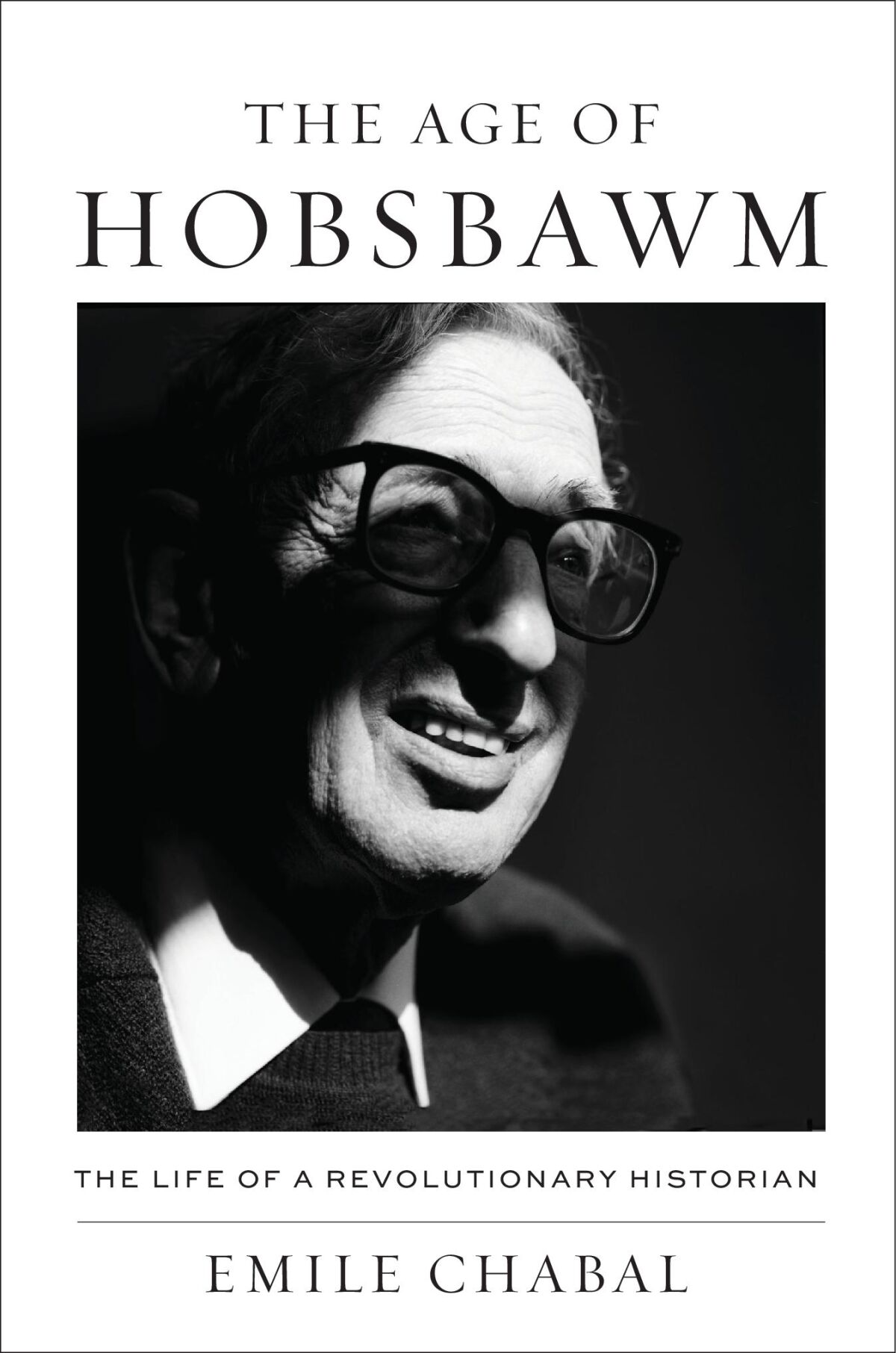
Excerpted from The Age of Hobsbawm: The Life of a Revolutionary Historian by Emile Chabal, published by The Belknap Press of Harvard University Press.