
Witness to a Revolution
Study for the Apotheosis of Washington in the Rotunda of the United States Capitol Building, by Constantino Brumidi, c. 1859. [Smithsonian American Art Museum]
When I arrived at the University of Wisconsin-Madison in September 1965 to begin my graduate studies with historian Merrill Jensen, I did not realize that, over the next few years, I would witness two dramatic paradigm shifts in our understanding of the American Revolution. Nor could I have imagined that more than 60 years later, those two profound changes in outlook would have such a lasting impact on how Americans viewed the country’s formative years.
I had chosen to study the Revolution at Wisconsin under Jensen rather than going to Yale to work with Edmund Morgan. Jensen’s early work, particularly The Articles of Confederation (1940) and The New Nation (1950), placed him as one of the last exponents of the “Progressive” school, which had dominated studies of the revolutionary era since early in the 20th century. The Progressive historians (who included most famously Charles A. Beard) highlighted social conflict and self-interest while downplaying the role of ideas. From a modern perspective, their categories — “radicals” and “conservatives” — seem flawed, and their aversion to ideology, questionable. As a history major at Swarthmore College, I recognized those problems but was intrigued by the areas they explored, such as the role of the economy. So, I chose Merrill Jensen and Wisconsin. However, by the time I arrived, Jensen was more set in his ways and less open to new ideas. He was also a misogynist — there were no women in our seminar.
Ed Morgan took a very different approach to the revolution than did Jensen and the Progressives. Morgan stood in the forefront of one of those two great paradigm shifts: for him, and the many who would follow his lead, ideas, and not interest, were the key to the era. These historians were sometimes called “conservatives” (they fit in well with the ethos of Cold War America) or neo-Whigs, since they revived the ideas of 19th-century Whig historians like George Bancroft. In The Stamp Act Crisis (1953, 1962), which Ed Morgan wrote with his wife Helen, the authors declare, “Yet in the last analysis the significance of the Stamp Act crisis lies in the emergence, not of leaders and methods and organizations, but of well-defined constitutional principles.” At the heart of those principles was the colonists’ refusal to allow Parliament to “tax them externally or internally.”
In the 1960s, the work of Bernard Bailyn and his student Gordon S. Wood breathed new life into the neo-Whig interpretation and cemented its role as the prevailing interpretation. There was palpable excitement as we graduate students read Bailyn’s and Wood’s books and articles. I particularly relished my exchanges with another Jensen student, Ronald Hoffman (who later would become director of the Omohundro Institute of Early American History and Culture), and with Joseph Ernst, a young professor who filled in when Jensen went on leave. We debated if ideas really had the causative power Bailyn suggested, and asked whether the neo-Whigs were justified in dismissing the economic concerns the Progressives had explored. Joe later invited me to apply for a position at York University in Toronto, where he had recently relocated. We became colleagues.
Where Morgan’s work was monochromatic, Bailyn and Wood created a rich, color-filled canvas. While Morgan had highlighted a line the colonists dared Britain to cross, Bailyn and Wood sketched in a universe of ideas that dated back to the Greeks and Romans and that had been further elaborated by British pamphleteers and others. The ideology that Bailyn and Wood mapped in detail focused on the battle between virtue and corruption, and the forms of government that could best defend liberty. The body of thought they uncovered was called “Commonwealth ideas” or more commonly “republicanism.” Ultimately, for Bailyn and Wood, Americans’ devotion to republican ideology in the face of attacks by corrupt politicians led to the colonial revolt. The colonists, Bailyn writes, saw a “deliberate assault launched surreptitiously by plotters against liberty both in England and America.” Economic concerns were incidental.
A few individuals challenged that synthesis. In 1972 Ernst and I published “An Economic Interpretation of the American Revolution,” in The William and Mary Quarterly. The article mapped the evolving economic ties between Britain and the colonies and noted the pressure those changes put on merchants and planters. Most historians, however, embraced the findings of Morgan, Bailyn, and Wood. They agreed that the Revolution was about principles — particularly, about “liberty” — rather than economics or self-interest. That outlook fit well with the patriotism that many Americans espoused and that shaped most textbooks.
There was an equally exciting second paradigm shift in these years: the newfound interest in people long excluded from the revolutionary narrative. These (overlapping) groups included African Americans, the common folk in the towns and countryside, white women, and Native Americans. Historians were influenced by the tumultuous 1960s, with the rise of the civil rights movement, demands for Indigenous rights, the beginnings of modern feminism, and antiwar protests. In Madison, we marched against the Vietnam War and denounced the recruiters for the Dow Chemical Company, which supplied the army with napalm.
The findings of the new social history, whose efflorescence began in the late 1960s, were embodied in the 1976 collection, The American Revolution: Explorations in the History of American Radicalism, edited by Alfred Young. It included essays on urban radicalism by Gary B. Nash and Dirk Hoerder; Ron Hoffman’s and Edward Countryman’s discussions of disaffected farmers; Ira Berlin on the changes in Black life; Francis Jennings’ exploration of the impact of the Revolution on Native Americans; and Joan Hoff Wilson’s analysis of the evolving role of women.
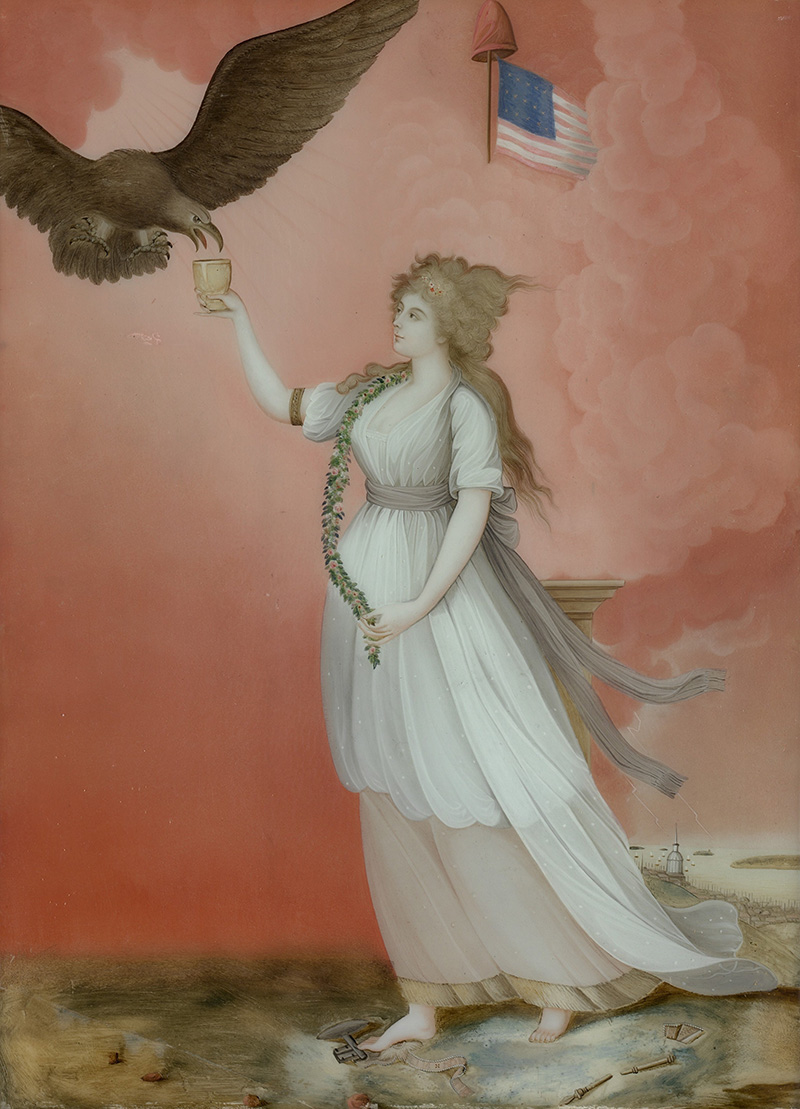
Fast forward to 2026 and the 250th anniversary of independence, and what is remarkable is how long-lasting the historiographical changes of the late 1960s have been. The stream of social history has broadened into a wide river, expanded by a flood of studies about Native Americans, women, African Americans, and the less wealthy. The geographical reach of this research now encompasses more areas. Historians today examine, along with more familiar topics, the Indigenous nations of the interior and the settlements of various European powers. Such scholarly forays are part of the turn toward “Vast Early America.”
The explanation of the causes of the Revolution, put forth by the neo-Whigs in the 1960s, has also proven surprisingly durable, though in this instance the original ideas have been repeated rather than elaborated. Many recent books examine the events and leaders in the clashes leading up to independence, as well as its aftermath. While these works provide important insights, they invariably rest on the assumption that a devotion to “liberty” underlay the revolt. Lofty principles provide a convenient armature for those narratives and affirm Lincoln’s pronouncement in the Gettysburg Address that America was a nation “conceived in Liberty.” For most historians, causation is now a problem solved and no longer a fruitful area of inquiry. Five leading researchers brought together in a 2024 symposium by the Journal of the Early Republic all agreed that “Interpretations of the causes of the American Revolution have changed less than interpretations of its consequences.”
Only a few scholars, including Woody Holton, Staughton Lynd, David Waldstreicher, and me, question the preeminence of liberty as the key to the Revolution. These dissenting historians are often called “neo-Progressives.” They share with the Progressives a belief in the importance of material conditions and economic self-interest. Holton details the impact of the downturn of the 1760s, while Lynd and Waldstreicher argue that the revolt was a “struggle for economic independence.” My views, which have evolved considerably since my 1972 article, emphasize the desire of colonists to pursue their commercial and territorial ambitions. It’s an analysis I present in A Mighty Empire: The Origins of the American Revolution (1988, 2010), my essay on the Revolution in Challenging the Myths of US History: Seven Short Essays on the Past & Present (2025), and the paragraphs below.
But what also must be emphasized are the profound differences between the neo-Progressives and Progressives. Recent scholarship, with its granular analysis of business conditions, imperial ties, and factional divisions, stands far removed from the generalizations proffered in earlier writings. Neo-Progressives also treat ideas very differently. For Beard and other Progressives, interest led to action, and that straightforward nexus shaped the course of U.S. history, including the Revolution and Civil War. Neo-Progressives complicate that link: they are more interested in ideology and argue that these often-nuanced worldviews explain behavior. For me and other neo-Progressives, ideology always has firm roots in material interest. As a point of contrast, the neo-Whigs, while underscoring the power of ideas, make clear they did not emerge from social and economic concerns.
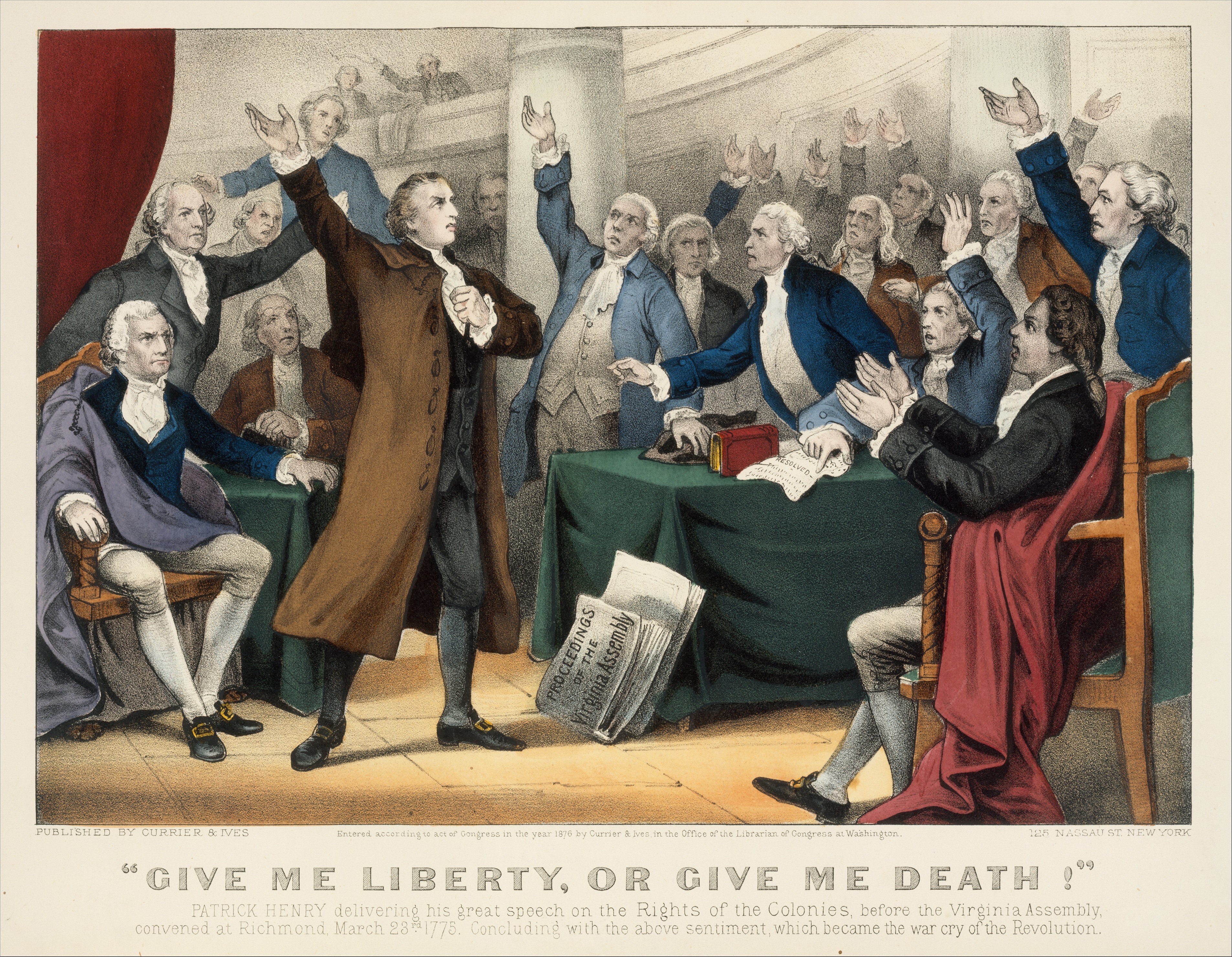
There is a need in this momentous anniversary of independence to reexamine the emphasis on “liberty” and once again look closely at the causes of the revolt. To a great extent, how we view the Revolution shapes how we view the nation today. No one who reads through the dozens of revolutionary era pamphlets, the hundreds of letters exchanged, and the countless postings in newspapers can lightly dismiss the focus on liberty. Americans repeatedly used that term and related it to the pressing issues of taxation and representation. Still, any explanation that relies on liberty as the key will be gravely flawed. While the concept cannot be ignored, it must be de-centered.
Liberty, as used in the revolutionary era, is a perilous idea to celebrate. Patriots usually gave it a very specific meaning: the right to have a dominant voice in the institutions that governed them. As one pamphleteer noted in 1764, to “enjoy the like liberties and immunities as other their fellow subjects are favored with, it was and is necessary the colonies should be vested with the authority and power of legislation.” For the revolutionary leaders such rights quietly excluded much of the population: Indigenous peoples, African Americans, women, and more generally, poorer whites. A modern reader would be shocked how often patriots spoke about “slavery,” with seemingly no awareness that twenty percent of the population was Black and unfree. Slavery was simply the antonym of liberty. “[N]o man can take my property from me without my consent,” observed one leading patriot in railing against British taxes, “if he does, he deprives me of my liberty and makes me a slave.”
It took a British observer, Samuel Johnson, to remark, “How is it that we hear the loudest yelps for liberty among the drivers of negroes?”
After independence, when the less wealthy (stirred by participation in the revolt) demanded a greater say in government, affluent patriots were of two minds about liberty. That ambivalence shapes the Federalist Papers, the tracts John Jay, James Madison, and Alexander Hamilton wrote to defend the new Constitution. Madison argued for the importance of the Senate, noting the “necessity of some institution that will blend stability with liberty.” Hamilton worried about a “zeal for liberty more ardent than enlightened.”
But there are stronger arguments for discounting the role of liberty in explaining the revolt than its fraught and ambivalent meaning. Liberty simply does not illuminate the activities the revolutionaries undertook or the division of Americans into patriots and loyalists. A focus on liberty sheds no light on the many campaigns against Native Americans, the effort to capture Canada, George Roger Clark’s conquest of the West, the chartering of the Bank of North America in 1781, America’s wildly successful demands (realized in the 1783 peace treaty) to expand national boundaries, or the opening of trade with China in 1784.
A fuller understanding of the causes of the Revolution must begin at mid-century with the strong support many colonists gave to the campaigns against the French and Indians. Individuals like George Washington in Virginia, Benjamin Franklin in Pennsylvania, the Livingstons in New York, and John Adams and the Hancocks in Massachusetts ardently backed British plans. These leaders, the expansionists, were opposed by others, such as Thomas Hutchinson in Massachusetts and the DeLanceys in New York who criticized calls to enlarge the imperial domain.
The expansionists had a vision of American growth that shaped their careers. In 1755 John Adams remarked that he foresaw the “transfer of the great seat of Empire into America,” adding, “if we can remove the turbulent Gallicks, our People according to the exactest Computations, will in another Century, become more numerous than England itself.”
The factions formed at mid-century, divisions that reflected landholding, religion, and merchants’ trading patterns, persisted after 1763, when Britain introduced more restrictive policies. The continuity for the expansionists was their belief that America would become a “mighty empire.” In the 1750s that outlook led them to side with the British against the French and Indians, and after 1763 it meant opposing Britain and challenging the new burdens on trade, settlement, and monetary policy. Their opponents, the nonexpansionists, bridled at the patriots’ bold plans and became loyalists.
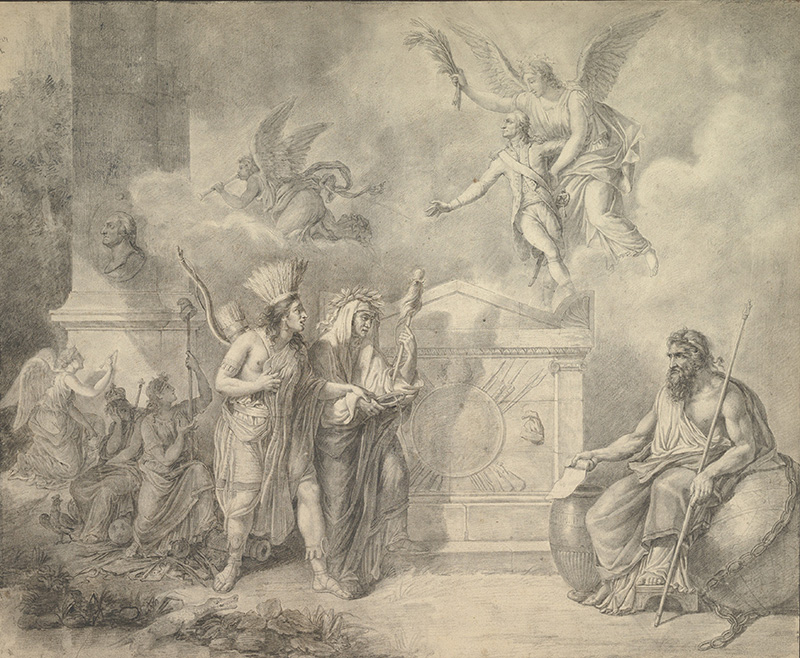
The legacy of the rebellion is complex and multifaceted. It includes the calls for liberty — as well as the racism embedded in those demands. It highlights Thomas Jefferson’s statement that “all men are created equal.” But at the heart of the revolt was the push for expansion, economic and territorial. That imperative led to growth and prosperity, but also a series of wars, including those against Tribal peoples, Mexico, and Spain.
The 250th anniversary of independence is a good time to reexamine the meaning of the Revolution. Such an investigation occurred 60 years ago when the fervor stirred up by the civil rights and antiwar protests led scholars to look at the world differently, and to develop a new, more incisive view of the consequences of the revolt. But that fecund decade, the 1960s, led to no startling insights about causation, only to an elaboration of the old-fashioned belief (going back to the Whig historians of the 19th century) that “liberty” was the key to the Revolution. That outlook fits well with the patriotic rhetoric, bunting, picnics, and fireworks that mark most commemorations of independence. This widely accepted story, however, is flawed. A hard look today at the path the nation has followed may help us reflect anew on what the nation’s birth was all about.
Want to keep reading about the 250th? Here is Bruce W. Dearstyne on how Calvin Coolidge celebrated the United States’ 150th anniversary. Find even more to explore on Bunk.