
There’s No Business Like Coup Business
The American Mosquito That Just Appeared in Mexico, by José Guadalupe Posada, c. 1903. [The Metropolitan Museum of Art]
In November 1876, a thickly moustachioed man made his way into Mexico City to accept the presidency, a title he was to hold, with only a brief interlude, for the next 35 years. General Porfirio Díaz seized power from the democratically elected President Sebastián Lerdo de Tejada, but he did not have the active support of the U.S. government, as, for example, Augusto Pinochet in Chile did in 1973. Instead he was backed by a cabal of American businessmen, politicians, and army generals.
Independent actions by American elites in the realm of foreign policy are often thought of as ending with the filibusters of the 1850s, when Americans tried to annex parts of Latin America, or cleave off and set up their own independent republics in foreign territory. However, as the Díaz escapade shows, these sorts of interventions were actually more successful, if far fewer, after the Civil War than before.
The American elite support for Díaz’s coup is curiously glossed over by many American and Mexican historians of Mexico and U.S. diplomatic history. The only substantial account is by John Mason Hart in his 2002 book Empire and Revolution, and only forms one chapter of his history of U.S.-Mexican relations since 1865. Even a January 2026 article on Díaz’s rebellion by the Mexican Daily News fails to mention any American involvement.
Díaz may have seemed the biggest winner of the 1876 invasion, but his path to power was, at the crucial stage, paved by American elites. Historiographical omissions of this kind prevent us from understanding the nature of U.S.-Mexican relations over time, and indeed how American elites were able to act independently in international relations and, when they felt the need to, effectively enact their own foreign policies independent of the U.S. government.
Both Mexico and the U.S. passed through existential crises in the 1860s, to say nothing of the war they fought against each other in the 1840s which resulted in the U.S. annexing half of Mexico’s territory. The U.S. passed through the vortex of the Civil War of 1861-65, while Mexico endured the War of Reform (1858-60) followed by the French intervention (1862-67), when France took advantage of Mexico’s instability and America’s preoccupation with the Civil War to invade Mexico and install the Austrian archduke Maximilian as emperor. During the Civil War, Abraham Lincoln and Mexican President Benito Juárez had expressed their support for one another. After the Confederacy surrendered, the Union sent guns and ammunition and thousands of volunteers across the Rio Grande to help dethrone Maximilian.
In the aftermath of these titanic conflicts, the U.S. embarked on the great economic expansion of the Gilded Age, typified by railroad construction, and was eager for new markets in Latin America and Asia. Mexico, on the other hand, struggled with a bankrupt treasury, shattered infrastructure, and political instability.
Porfirio Díaz had emerged as one of Mexico’s most powerful generals in the War of Reform and the struggle against the French, leading the army that liberated Mexico City from its Conservative and Imperialist rulers in 1867. He was a candidate in both the 1867 and 1871 presidential elections, losing both to incumbent Benito Juárez — the second very closely, as a split vote threw the election to Congress, which narrowly decided for Juárez. In his campaigns, Díaz, who complained about Juárez’s repeated re-elections, promised to open Mexico up to American investment and privatization, convinced it would rescue Mexico’s economy.
In the wake of Juárez ’s 1871 victory, Díaz launched a revolt, known as the Plan de la Noria, with the intention of seizing power. The effort failed, but Juárez died of a heart attack in 1872. After accepting an amnesty deal from Juárez’s successor, Sebastián Lerdo de Tejada, Díaz left Mexico. He lost an election to Lerdo once again in late 1875. By January 1876 he was living on the other side of the Rio Grande in Brownsville, Texas, planning his return. That month, a group of Mexican generals launched their own revolt, the Plan of Tuxtepec, and invited Díaz to lead them. Díaz agreed after securing the support of powerful American businessmen and generals. Which raises the question: why did they support him?
The Lerdo government was extremely wary of encouraging American investment in Mexico, aware that this would lead the more powerful U.S. to dominate its poorer southern neighbor. Indeed, some American politicians and businessmen, such as railroad investor Ephraim Morse and Secretary of the Interior Jacob D. Cox, saw increased American investment in Mexico as a prelude to annexation. “Between strength and weakness,” Lerdo allegedly said, must come “the desert”: in other words, there had to be a borderland buffer zone between Mexico and the U.S., both a physical and legislative separation of the American and Mexican economies.
Following this logic, the Lerdo government refused to grant contracts to American railroad companies, such as the Pennsylvania, Central Pacific, and Southern Pacific. In late 1875, Lerdo canceled all American railroad concessions already granted in Mexico save one. Two months later he rejected a U.S.-Mexico bilateral trade treaty, and also refused to resume paying the Mexican national debt to American bondholders, which had been suspended in the early 1870s. With these actions, Lerdo had alienated most of the American elite.
Over the border in Brownsville, Díaz also found many local businessmen receptive to his cause, in particular Richard King and James Stillman, cattlemen and owners of the freighters that plied the Rio Grande. Businessmen in Brownsville, including King and Stillman’s late father Charles, had a long history of disturbing the peace in pursuit of their commercial ambitions. In the early 1850s they had sponsored the “Merchants War,” an attempt to create an independent republic in northeastern Mexico (and thereby subvert Mexican customs charges). During the Civil War, they had initiated a trade in cotton from Texas, via neutral Matamoros, to Europe. King and Stillman monopolized the transport of cotton to Matamoros and became fabulously wealthy. Some historians have estimated that the trade through Matamoros lengthened the war by two years.
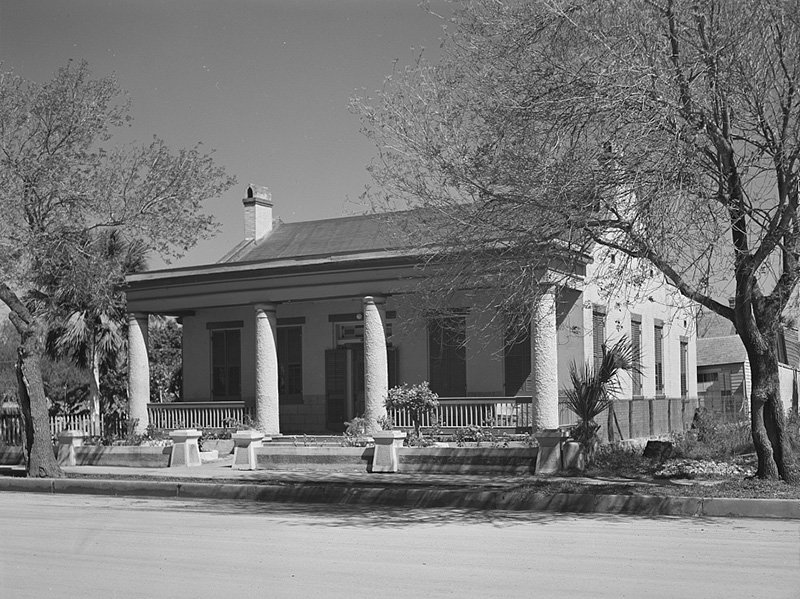
In 1875, King and Stillman’s principal concern was a bandit named Juan Cortina. Cortina is sometimes called the “Robin Hood of the Rio Grande,” as his support of local Tejano rights led him to fight the U.S. in 1859 and the Confederacy in 1861. Regularly since 1871, Cortina had been mounting raids across the Rio Grande from Mexico into Texas, rustling cattle and seeking revenge for the deaths of Cortinistas in earlier raids. This was much to the annoyance of businessmen such as King and Stillman, and of U.S. army generals such as Edward Ord, the commander of the Department of Texas responsible for dealing with Mexican bandits.
In other words, there were a lot of highly powerful interests, on both a national and regional level, inclined to support Díaz in his rebellion against Lerdo. Díaz was as eager for American investment as Americans were to invest — he and his supporters were known as “the railroaders” because they believed that railroads were the first step towards rescuing and modernizing the Mexican economy. In January 1876, Díaz’s secretary wrote to William Rosecrans, former Union general and representative of the Pennsylvania Railroad and New York banking interests in Mexico, encouraging him to lend his support (and that of those he represented) to Díaz’s cause. Díaz had visited New York in December 1875 to meet with leading New York financiers. In return for their support, he promised to open Mexico up to American investment and stop Cortina’s cross-border raids. With the support of these American businessmen, Díaz’s army was equipped with 500 rifles and 2 million cartridges, in addition to food supplies for the soldiers.
Díaz began launching his own raids across the Rio Grande from his base in Brownsville. Protests by the Lerdo government and one of Lerdo’s few American supporters, former diplomat and railroad promoter Edward Lee Plumb, roused Washington, but to little effect. Secretary of State Hamilton Fish ordered General Ord to stop Díaz, but Ord refused, saying to do so would violate the Mexicans’ civil liberties. Weapons and men arrived by boat from New York and New Orleans, and overland through Texas. General Ord made no move to stop these either.
In April 1876, Díaz crossed the Rio Grande with an army of 1,600 men and captured Matamoros. Half of Díaz’s army were white Americans. Among his supporters was notable Texas Ranger John “Rip” Ford, who had been involved in American attempts to reorder Mexican politics since the 1850s. He had fought in the Merchants’ War and played a key role in the Matamoros trade during the Civil War. Ford’s involvement, like that of Stillman and King, shows how American elite support was shaped by both national and local borderland conditions.
One of Díaz’s Mexican supporters, ironically enough, was Juan Cortina, who like many Mexicans with a regional powerbase opposed Lerdo’s attempts at political centralization. The outcome of the rebellion was far from predetermined, but eventually the government army was defeated in the Battle of Tecoac in November 1876. Following Tecoac, Lerdo fled the country, and Díaz was elected president — as the only candidate — in May 1877. Except for the four years from 1880-84 when his protégé Manuel González held power, Díaz would remain in office until the Mexican Revolution forced him into exile in 1911.
During Díaz’s time in power, known as the Porfiriato, foreign investment flooded into Mexico. The Mexican economy boomed, averaging growth of 8% a year, but most of the wealth went to foreign companies rather than ordinary Mexicans. American-owned railroads proliferated across Mexico, including the Mexican Southern Railroad. One of its main shareholders was Ulysses S. Grant, and one of its chief civil engineers was Edward Ord. As for Cortina, once Díaz took power he was put under house arrest, where he remained until his death in 1894. “Can any gentleman dare say,” Rip Ford asked, “that President Díaz has not fully redeemed his pledge?”
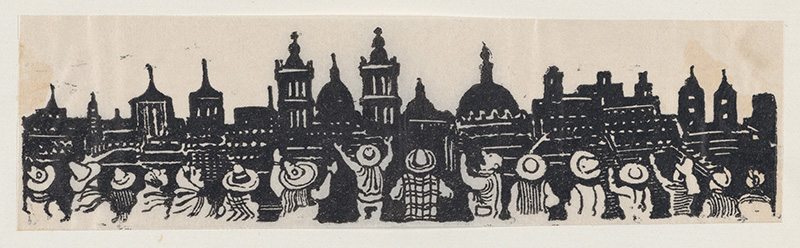
The American elite support for the Díaz rebellion shows how U.S.-Mexican relations, so close and supportive in the Civil War era, turned predatory and defensive again as American economic power increased. It also shows how those American elites could at times conduct their own foreign policies essentially independently of the U.S. government in the 19th and early 20th centuries.
The historian William Appleman Williams once described Latin America as the laboratory for U.S. foreign policy. The American elite support for Díaz was an experiment of a private kind. As John Mason Hart, the rare historian who substantially addresses the American elite involvement in the Díaz rebellion, has noted, support for Díaz “was the first engagement in which the American elite mustered itself against a duly constituted, elected, and internationally recognized government in what is now called the developing world.” These intrusions would continue. In 1911, for example, the American owner of the Cuyamel Fruit Company sponsored a coup in Honduras, ignoring the State Department’s orders not to meddle in that nation’s affairs. But by the latter half of the 20th century, whatever daylight may have existed between American corporate interests in Latin America and official U.S. policy had vanished. When the United Fruit Company, which acquired Cuyamel in 1929, wanted a coup in Guatemala in 1954, it turned to the CIA rather than undertaking the task itself.
The involvement of King, Stillman, and Ford (and to some extent, of Cortina as well) also shows how American elite support for Díaz involved both the metropole and the periphery. Díaz’s success secured an outcome that King and Stillman had been trying to achieve in northeastern Mexico for almost 25 years.
This power to dictate Mexican politics ironically negated desires amongst some U.S. statesmen for expansion across the Rio Grande. As the railroad promoter and erstwhile Lerdo supporter Edward Lee Plumb noted, “if we have their trade and development, we need not hasten the greater event” — that is, annexation. With the success of his rebellion, Porfirio Díaz delivered that trade and development into American hands. After his death, there developed a legend that he had once bemoaned: “Poor Mexico! So far from God, and so close to the United States!” Although the line is apocryphal, there is an element of truth behind it. Perhaps Porfirio Díaz realized too late the Faustian bargain he had made with American business.